
Crawlspace Mold in Central Arkansas Homes: Causes and Fixes
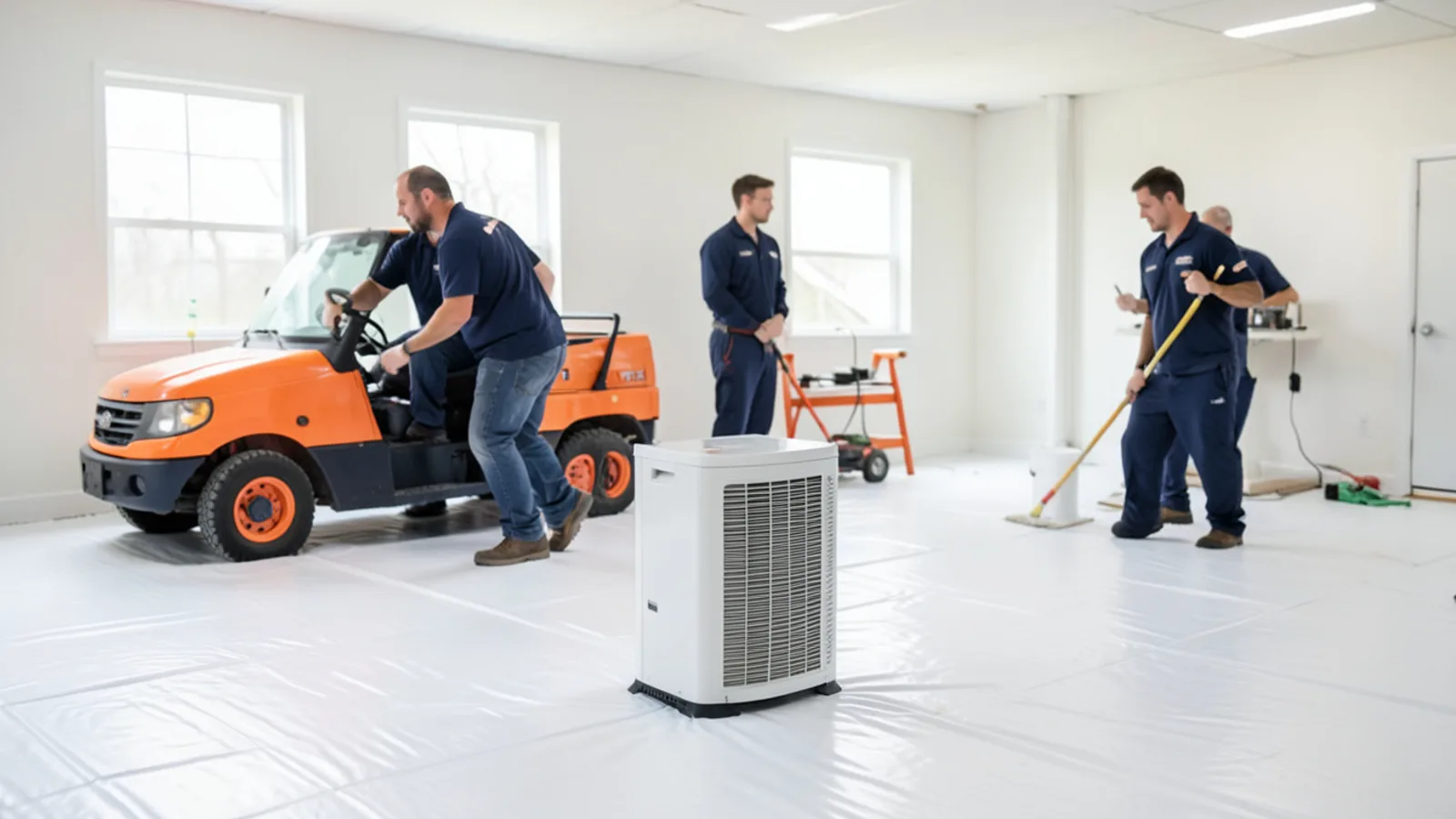
Crawlspace mold in Central Arkansas is caused by extreme ambient summer humidity entering exterior foundation vents and condensing against cooler subflooring, exacerbated by dense red clay soils that trap groundwater beneath pier-and-beam foundations.
The Stack Effect: How Crawlspace Air Enters Your Living Space
Many homeowners assume that what happens in the crawlspace stays in the crawlspace. In reality, residential physics dictates the opposite. The "stack effect" describes the natural convective movement of warm air rising through a home and exiting through attic vents. As indoor air rises, it creates negative pressure on the ground floor, drawing up to 50% of the air you breathe in your living room directly from the crawlspace through subfloor seams, plumbing penetrations, and electrical chases. When crawlspace framing is colonized by mold, microscopic fungal spores and mycotoxins circulate directly into your home’s breathing air.
Get Connected with a Local Contractor
Dispatch operates 24/7 across Little Rock, North Little Rock, Sherwood, Maumelle, Bryant, Benton, Conway, and Jacksonville.
Why Arkansas Summer Humidity and Clay Soil Create the Perfect Mold Trap
Central Arkansas experiences prolonged summer periods where outdoor relative humidity exceeds 70% to 80%. When this hot, humid air enters through standard foundation vents, it encounters subfloor wood framing that is cooled to 68°F–72°F by indoor air conditioning. Because cooler air holds less moisture, relative humidity in the crawlspace spikes to 100%, causing water condensation to form along wooden floor joists and fiberglass batt insulation. Compounding this atmospheric challenge is Central Arkansas’s dense red clay soil, which prevents natural groundwater drainage and traps standing dampness against foundation footings.
Warning Signs of Hidden Subfloor Fungal Colonization
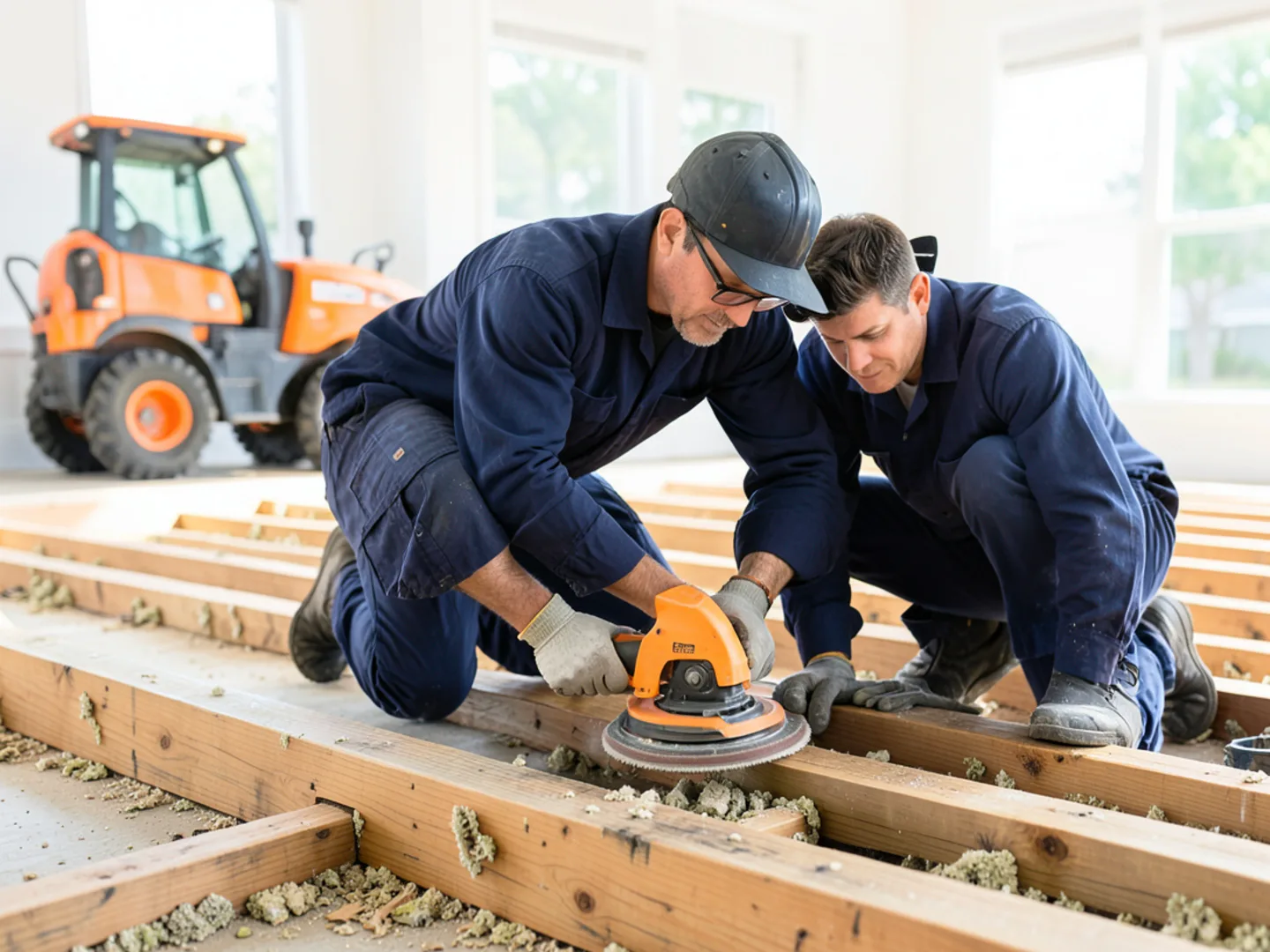
Because crawlspaces are rarely inspected by homeowners, mold growth often continues for months before detection. Key warning signs include: persistent earthy, musty odors in living rooms that worsen during humid summer months; family members experiencing unexplained allergy symptoms, eye irritation, or morning congestion; hardwood flooring cupping or buckling upstairs; and sagging fiberglass batt insulation hanging beneath floor joists.
Why Bleach and Surface Sprays Fail on Structural Wood Framing
A pervasive myth is that spraying household bleach kills crawlspace mold. In truth, bleach is formulated with sodium hypochlorite in a water base. When sprayed on porous pine joists, the chlorine dissipates into the air, while the water soaks into the wood grain, actually feeding fungal hyphae embedded deep in the lumber. Professional remediation requires mechanical removal: HEPA vacuuming, hand-sanding or dry-ice blasting, applying EPA-registered botanical antimicrobials, and drying the lumber below 16% wood moisture content.
Full Encapsulation vs Dehumidification-Only: Choosing the Right Solution
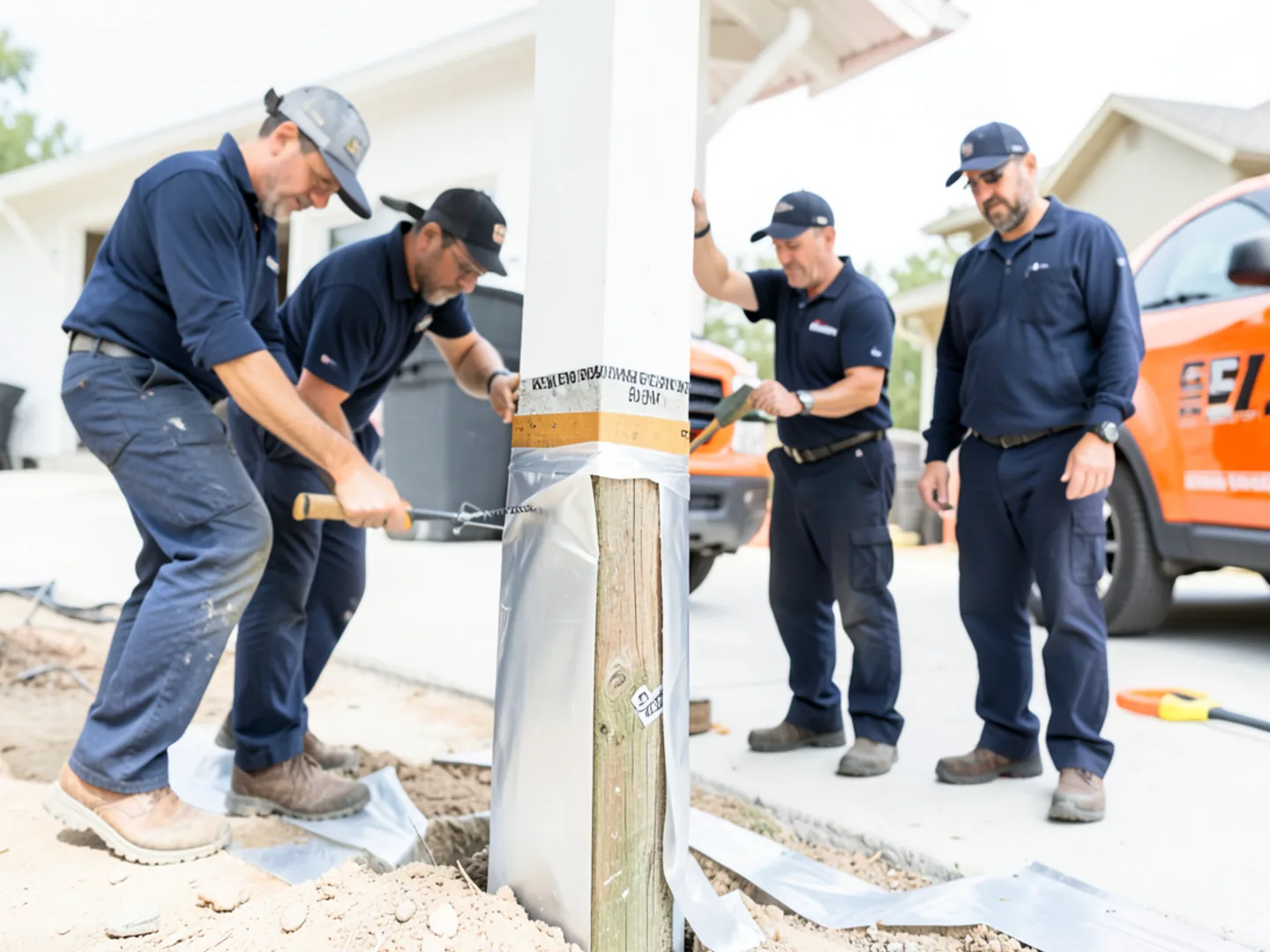
Central Arkansas homeowners face a critical decision when addressing crawlspace moisture: whether to install a simple vapor barrier and dehumidifier or invest in complete encapsulation. A basic remediation project replaces torn plastic with a 10-mil polyethylene barrier across the ground and stages a commercial crawlspace dehumidifier. Full encapsulation goes significantly further: technicians seal all foundation perimeter vents with rigid insulated foam, run heavy 12-to-20-mil reinforced vapor barrier up foundation walls and interior support piers, seal all seams with specialized waterproof mastic tape, and install a dedicated self-draining crawlspace dehumidifier with a digital condensate pump. While encapsulation carries higher upfront costs ($5,500 to $12,000+), it permanently protects structural framing, prevents termite moisture attractants, and reduces household summer cooling costs by up to 15%.
ANSI/IICRC S520 Clearance Testing and Post-Remediation Verification
How do you know when crawlspace mold remediation is truly complete? Under ANSI/IICRC S520 professional standards, visual cleanliness alone is insufficient. Legitimate remediation projects conclude with Post-Remediation Verification (PRV) or clearance testing. An independent third-party environmental inspector takes non-viable air samples inside the crawlspace and compares spore concentrations against outdoor control baseline samples. A passing clearance requires that indoor spore counts are lower than outdoor ambient levels, with zero elevated indicator species like Stachybotrys chartarum or Chaetomium. Professional contractors guarantee their work until third-party clearance is achieved, providing written documentation that protects home resale value.
Healthy Crawlspace vs Compromised Mold-Prone Crawlspace
| Inspection Factor | Healthy Crawlspace Standard | Compromised Crawlspace Condition | Required Remediation Action |
|---|---|---|---|
| Relative Humidity | Sustained below 60% | Sustained above 70%–80% | Deploy commercial crawlspace dehumidifier |
| Wood Moisture Content | Below 15%–16% WMC | Exceeds 18%–28% WMC | Mechanical drying & negative air filtration |
| Ground Soil Covering | 10–20 mil sealed vapor barrier | Exposed bare damp dirt or torn 4-mil plastic | Install heavy sealed ground vapor barrier |
| Floor Joist Condition | Clean bare wood, dry insulation | Black/green fungal growth, wet sagging batts | Remove wet insulation, HEPA sand joists |
| Foundation Drainage | Graded away from footings, no water | Standing puddles against interior piers | Install sump pump & interior French drain |
Professional Contractor Perspective
According to research from the University of Arkansas Division of Agriculture Extension, traditional passive foundation vents fail in hot, humid southeastern climates. During summer, venting introduces moisture rather than removing it. Modern building science strongly favors sealed crawlspaces with heavy polyethylene vapor barriers (12-mil to 20-mil) sealed around piers and walls, paired with dedicated low-profile crawlspace dehumidifiers to permanently maintain relative humidity below 60%.
In accordance with our editorial standards, our informational guides and process breakdowns are grounded in verifiable documentation from state licensing boards, municipal utility codes, and official meteorological data:
- 1.University of Arkansas Division of Agriculture Extension — Crawlspace moisture dynamics.
- 2.ANSI/IICRC S520 Standard and Reference Guide for Professional Mold Remediation. — ANSI/IICRC S520 Standard and Reference Guide for Professional Mold Remediation.
- 3.EPA Mold Remediation in Schools and Commercial Buildings. — EPA Mold Remediation in Schools and Commercial Buildings.